
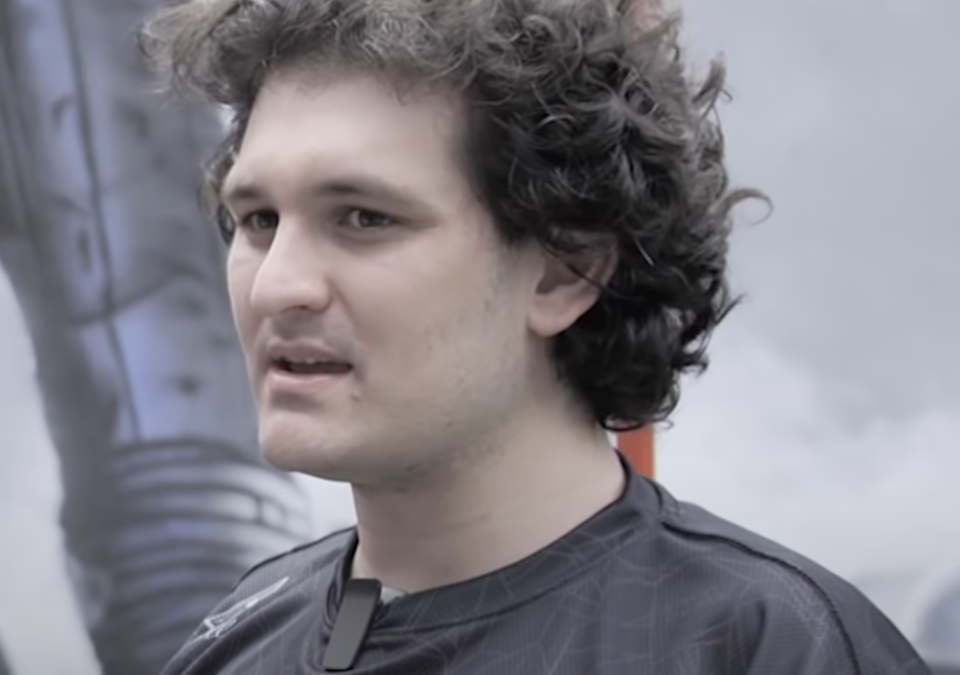
Sam Bankman-Fried was my introduction to effective altruism. The financial shenanigans surrounding the implosion of FTX, his recently founded crypto exchange, dominated the news in late 2022. His meteoric rise and precipitous fall highlight the Achilles heel of the philosophy he embraced. In his mind, using philanthropy to benefit the distant future removed any sense of guilt from his unbridled and unethical quest to make billions. That’s all I needed to know at the time.
The realization that some of the smartest people in the artificial intelligence world are effective altruism true believers forced me to reassess my initial opinion. The writing of the Oxford philosopher William MacAskill, the guru who coined the expression itself, is the place to start. However, his seminal work What We Owe the Future raises even more red flags than Sam Bankman-Fried’s hypocrisy. It turns out that effective altruism is based on nothing more than a cocktail of pop-futurism mixed with pseudo-history.
Effective altruism purports to use evidence and reason to benefit humanity. What separates it from classic utilitarianism—the greatest good for the greatest number—is its rejection of the “tyranny of the present” and its focus on the distant future. Quantitatively utilizing probability to estimate expected returns, it endeavors to save the maximum number of future lives per dollar spent. As the journalist Kevin Roose ruefully observes, it’s “Moneyball for morality.” MacAskill removes emotion from the philanthropic equation, deeming it immoral, for example, to fund medical research because a loved one died from an incurable disease. The money could be better used by saving lives thousands of years in the future. The rationale for this intuitive disconnect is “longtermism,” another term originated by MacAskill. It maintains that the moral priority of our time is to positively influence the long-term future. Lives in the future matter more than those of the present simply because there will be so many more of them.
Longtermism is the linchpin of effective altruism, and the reduction of catastrophic risk to the earth is the most efficient way to achieve its goals. These risks include not only human extinction but also the collapse or stagnation of civilization. There are many potential causes for extinction, including nuclear war, climate change and pandemics, but perhaps the highest one on MacAskill’s list is the existential risk of an artificial intelligence-induced Armageddon. This explains why so many artificial intelligence “doomers” are effective altruists working in the industry.
But here is the issue. Does the idea that people living thousands of years from now are more important than humans today have any validity? One wonders if MacAskill heard of the basic financial concept of present and future value. A dollar in your hand now is more valuable than one you receive in the future. That can also apply to people. Helping a person today is more beneficial and has more impact than aiding a hypothetical one in a future that might never exist. MacAskill constructs complex equations of the probable expected values of philanthropic outcome to justify his approach. The key variables are contingency (whether a specific action will have a long-term impact), significance, and persistence, but for all the equations’ quantitative affectations, it is guesswork pure and simple. An individual motivated by personal experience to give to medical research might very well be be the catalyst for a new medicine that saves millions of current and future lives. Therefore, a free market portfolio of committed philanthropists driven by a multiplicity of motives is bound to outperform a model based on philosophical supposition and political bias.
Moreover, longtermism is not only antithetical to human nature but it also exhibits collossal arrogance. Philanthropy is driven by the desire to alleviate the poverty, sickness and injustices that surround us both in our communities and the world at large. Most of us instinctively understand that influencing the world thousands of years from now is a fool’s errand. In their obsession to fashion the future, a role usually reserved for the divine, effective altruists have created their own cult-like secular religion with them playing the role of demi-gods. It’s devoid of any moral grounding from the world’s religious and philosophical traditions.
The best that can be said about the futuristic component of effective altruism is that it’s highly speculative with little grounding in the real world. If anything, MacAskill’s use of history is even more problematic. He evokes the campaign to abolish slavery in the eighteenth and nineteenth centuries as his test case. Rather than confronting the complex economic, social and intellectual forces driving abolition, MacAskill succumbs to a simplistic, jargon infused interpretation. He focus’s almost entirely on the Quackers, and one man in particular, the eighteenth-century activist and provocateur, Benjiman Lay. In his analysis, the abolitionist movement germinating during the Enlightenment occurred during a period of “plasticity,” another of his favorite buzz words. He likens plasticity to the precise time in glassmaking when the glass is still molten and not hardened into its permanent shape. A fluid, or molten, intellectual environment in turn provides maximum “contingency,” or the ability to leverage change, before “value lock-in” stifles progress. This is his model for the effective altruism’s agenda today. We are in a period of plasticity today, which provides a window of opportunity to save the world. But we must act quickly before the development of superintelligent AI locks in our values forever.
MacAskill explicitly defines the values we should embrace while changing the future. They need to be “open minded, ecumenical and morally explorative.” No one could argue with that, but they are non-controversial because they mean absolutely nothing. Relativist and post-modern to the extreme, they are aimed at the progressive Silicon Valley choir he’s preaching to. He excludes “bullshitting” from the dialogue surrounding values, but one suspects that MacAskill considers himself as the final arbiter of what it actually entails.
God is totally left out of the equation, not even appearing in the index, and sacred texts are abruptly dismissed. MacAskill maintains that the path to moral truth is through “refection and good-faith debate, rather than studying the “scriptures of a holy book.” Plasticity is his touchstone, and the Bible to him is a rigidly ossified relic composed thousands of years ago. What he fails to comprehend is that religious texts and classical philosophical tracts are living documents. Fundamental moral truths are discerned, and they evolve as the world changes. It’s the height of hubris to dismiss the wisdom of the past while grappling with the moral issues of the present and the future. The first few chapters of Genesis provide a level of insight into the human predicament that MacAskill could never dream of approaching.
At the conclusion of his book, MacAskill defines the doctrine of his pseudo-scientific secular religion. Suffice it to say that it’s not quite up to the Beatitudes in the Sermon on the Mount. He encourages people to choose professions that will benefit the future. But if you decide to avoid these lower paying, socially responsible jobs and make serious money instead, just give some of it back to the right causes and all is forgiven. This permits you not only to avoid any feeling of guilt, but also to assume God-like qualities by your positive impact on future lives. You might even be able to follow in the footsteps of Sam Bankman-Fried.